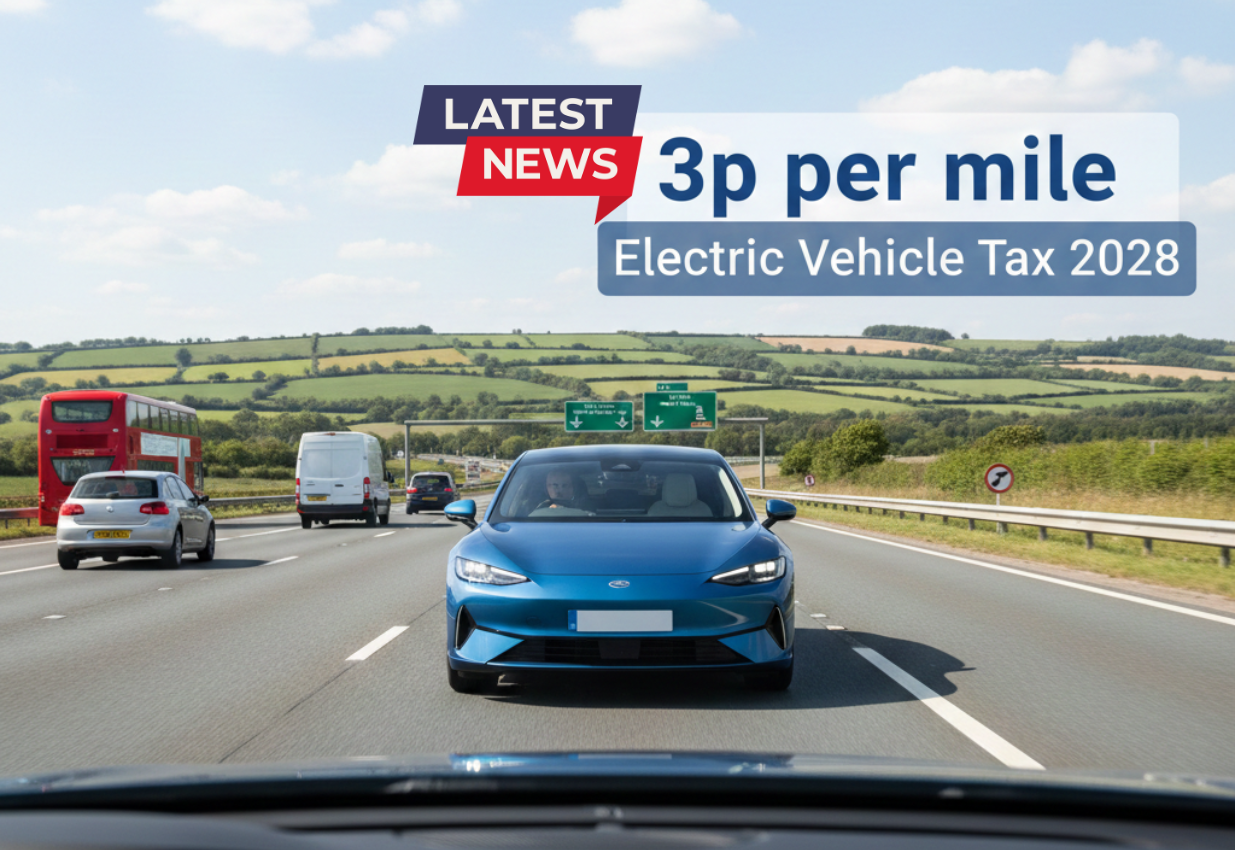
If you own an electric car in the UK or plan to buy one soon, you’ll soon have to pay a new electric vehicle tax. Announced by Chancellor Rachel Reeves, this major shift introduces a pay-per-mile tax on electric and hybrid cars starting in 2028, fundamentally changing how road tax (UK) will be calculated.
The new electric vehicle charge aims to replace declining fuel duty revenue as drivers move away from petrol and diesel. While the government has confirmed a temporary fuel duty freeze, the electric vehicle tax will ensure all motorists contribute fairly to road maintenance.
In this detailed guide, we’ll explore how the per-mile EV tax works, why it’s being introduced, and what it means for UK drivers, including insights for cross border EV drivers, Northern Ireland motorists, and those buying their first EV. Pagani Zonda HP Barchetta
Understanding the New Electric Vehicle Tax
The electric vehicle tax is a policy introduced in the UK government’s 2025 Budget to create a fairer road revenue system. As more people switch from petrol to electric cars, traditional road tax (UK) and fuel duties have declined, leaving a funding gap.
Starting April 2028, all electric car owners will pay a pay-per-mile tax of 3p per mile, while plug-in hybrid drivers will pay 1.5p per mile. The amount will increase annually with inflation.
This electric vehicle charge will be integrated into the existing Vehicle Excise Duty (VED) system, making it simple to administer. Mileage data will be collected during your annual MOT test or through digital tracking tools.
The policy ensures that electric vehicle owners to face pay-per-mile tax just like petrol drivers contribute through fuel duty, aligning costs with actual road use. Pagani Zonda C12
Why Is the UK Introducing This Tax
The introduction of the electric vehicle tax stems from one primary issue, fairness and funding.
Here’s why the UK government, led by Rachel Reeves, implemented the policy:
- Falling fuel tax revenue: With over two million electric cars now on British roads, fuel duty income is declining.
- Infrastructure costs: Roads require constant maintenance, and EVs still contribute to wear and tear.
- Budget balance: The fuel duty freeze (in place since 2010) has saved drivers money but reduced government income.
The Office for Budget Responsibility (OBR) estimated that the per-mile EV tax could generate £1.1 billion in 2028–29 and up to £1.9 billion by 2030–31.
Reeves stated, “Drivers will be taxed based on how much they drive, not just the type of car they own.” This marks the beginning of a long-term vehicle taxation reform. Pagani Zonda Cinque Roadster
How the Pay-Per-Mile Tax Works
To make it simple, here’s a breakdown of how the pay-per-mile tax will function:
| Category | Charge (per mile) | Start Date | Collection Method |
|---|
| Fully Electric Vehicles | 3p | April 2028 | MOT-based mileage reading |
| Plug-in Hybrids | 1.5p | April 2028 | MOT or registration mileage |
| Petrol & Diesel | 6p (via fuel duty) | Ongoing | Built into fuel price |
Mileage will be recorded annually, and the amount due will be added to your road tax (UK) payment.
For example, an EV owner driving 8,500 miles per year would pay approximately £255, roughly half the equivalent fuel duty cost for a petrol car.
However, there are challenges such as odometer tampering (clocking) and privacy concerns if digital tracking or sat-nav-based systems are introduced. Pagani Zonda Tricolore Specs
Impact on Drivers and the EV Market
The electric vehicle tax is expected to influence both consumer behaviour and the automotive market.
Positive Outcomes
- Fairness across vehicle types
- Sustainable funding for road maintenance
- Encouragement for efficient driving habits
Potential Concerns
- Reduced EV sales: OBR predicts 440,000 fewer EVs sold by 2030
- Cost sensitivity: Drivers may reconsider buying EVs due to lifetime costs
- Consumer trust: Many EV owners feel “penalised for doing the right thing”
Car manufacturers like Ford and industry groups such as the SMMT have warned that the timing could “slow EV adoption” unless incentives remain strong.
Still, the government plans to invest £1.3 billion in expanding EV charging networks and infrastructure, balancing the electric vehicle charge with long-term benefits. HR88B8888 car number plate
Electric Car Tax in Northern Ireland: Cross-Border Challenges
One of the biggest complications lies in electric car tax Northern Ireland, where many cross border EV drivers frequently travel between Northern Ireland and the Republic of Ireland.
Drivers are asking: “How will miles driven outside the UK be tracked and taxed?”
Ciarán O’Doherty from Londonderry, for example, drives to Donegal multiple times a week. He questions how his “Irish miles” will be separated from UK mileage for tax purposes.
Experts suggest GPS-based tracking could help, but privacy and accuracy concerns remain. Mark McCall, chair of the Electric Vehicle Association of Northern Ireland, called the move “really premature,” urging clarity on cross-border exemptions.
For now, EVs registered abroad are exempt, but further guidance is expected by 2026 as the UK refines its vehicle taxation reform. Tata Sierra Mileage 2025
Comparing EV Tax to Fuel Duty
A side-by-side look at how the per-mile EV tax compares with traditional fuel duty:
| Vehicle Type | Tax Type | Rate (Approx.) | Collection Method | Notes |
|---|
| Petrol Car | Fuel Duty | 6p/mile | Built into fuel cost | Unchanged since 2010 |
| Diesel Car | Fuel Duty | 6p/mile | Built into fuel cost | Higher CO₂ output |
| Electric Car | Pay-Per-Mile Tax | 3p/mile | Mileage recorded via MOT | Starts April 2028 |
| Plug-in Hybrid | Pay-Per-Mile Tax | 1.5p/mile | Mileage recorded via MOT | Transitional rate |
The fuel duty freeze keeps petrol prices stable, but it also highlights why the government needs alternative sources of revenue, hence, the electric vehicle tax. Mahindra XEV 9S Launch
What Drivers Think: Voices from the Road
Feedback has been mixed.
- Stephen Walton (Crewe): “I paid more to go electric to do the right thing, now I’m being taxed for it.”
- Delvin Lane (InstaVolt CEO): “We urge the government to co-design a fair system that keeps EV incentives alive.”
- AA President Edmund King: “Drivers understand the need for balance, funding roads while not slowing down the EV transition.”
Public sentiment shows frustration, but also understanding that the electric vehicle charge is part of a broader road tax (UK) evolution. Bajaj Auto Riki E-Rickshaw
What This Means for Car Buyers
For anyone considering a switch to an EV, here’s what you need to know.
Advantages
- EVs still have lower running costs overall
- Cheaper per-mile cost compared to fuel duty
- Incentives like zero congestion charge zones and low-emission benefits remain
Considerations
- Factor in the new electric vehicle tax when calculating ownership cost
- Check your mileage patterns, high-mileage drivers will pay more
- Monitor updates to vehicle taxation reform over the next three years
CarBlogs Tip:
Use our Car Comparison Tool to compare car tax electric vehicles versus car tax electric cars powered by petrol or hybrid systems. Knowing your annual mileage can help estimate your future tax liability accurately. Pagani Zonda Revolucion
Is This the Start of a Bigger Vehicle Taxation Reform
Experts believe this is just the first stage of comprehensive vehicle taxation reform.
Some policymakers and energy analysts suggest taxing electricity consumption instead of mileage, a model that could reflect vehicle weight, energy efficiency, and charging source (home vs public).
Others argue for a dynamic road pricing model that charges more during peak congestion.
Whatever the case, the per-mile EV tax is a stepping stone toward a more sustainable and data-driven road funding system. Mahindra Formula BE.6 Launch
CarBlogs’ Expert Analysis
At CarBlogs, we see this as an inevitable step in the UK’s automotive evolution. The electric vehicle tax ensures fairness and funding, but execution will be crucial.
If implemented smartly, with transparency, digital tracking accuracy, and continued incentives, the electric vehicle charge won’t slow adoption. Instead, it could make EV ownership more accountable and efficient.
Our experts recommend that car buyers:
- Keep up-to-date with policy changes
- Compare total cost of ownership (TCO) for all car types
- Look for EV models with high range efficiency and lower depreciation
For real-time updates, check our latest EV reviews and tax guides on CarBlogs.in. Mahindra XEV 9S Electric SUV
Chart: Estimated Annual Cost Comparison
| Annual Mileage | Petrol Car (Fuel Duty) | Electric Car (Pay-Per-Mile Tax) | Hybrid (Pay-Per-Mile Tax) |
|---|
| 5,000 miles | £300 | £150 | £75 |
| 8,500 miles | £510 | £255 | £127 |
| 12,000 miles | £720 | £360 | £180 |
| 15,000 miles | £900 | £450 | £225 |
(Estimated using average duty rates; subject to inflation.) Scout Motors Headquarters
Frequently Asked Questions (FAQs)
What is the UK electric vehicle tax
The electric vehicle tax is a new system where EV owners pay 3p per mile driven, starting in 2028, replacing part of the lost fuel duty revenue.
When does the pay-per-mile tax start
The pay-per-mile tax begins in April 2028, as part of the updated road tax (UK) system.
Who announced this policy
It was introduced by Rachel Reeves in the 2025 UK Budget as part of a broader vehicle taxation reform.
How will mileage be tracked
Mileage will be checked during your annual MOT or car registration, integrated with the DVLA’s database.
How does this affect electric car tax in Northern Ireland
Electric car tax Northern Ireland drivers are concerned about how cross-border travel will be taxed. The government is consulting on fair mileage tracking for cross border EV drivers.
Will petrol and diesel cars continue paying fuel duty
Yes, petrol and diesel drivers will still pay through fuel duty, which effectively costs about 6p per mile.
How much will EV owners pay annually
On average, an electric driver covering 8,500 miles will pay about £255 per year in electric vehicle charge.
Does this mean EVs are no longer cheaper
Not necessarily. Despite the new per-mile EV tax, EVs remain cheaper to run due to lower energy and maintenance costs. 2026 Acura SUVs
Conclusion: A Fairer, Greener Future on the Road Ahead
The UK’s electric vehicle tax marks a transformative chapter in road funding and sustainability. It ensures fairness, accountability, and continued infrastructure development while adapting to a cleaner automotive future.
For EV owners, the pay-per-mile tax may seem daunting, but it’s a necessary step in modernising how we pay for our roads. Whether you’re a new buyer, a seasoned driver, or one of the many cross border EV drivers, being informed helps you make smarter choices.
At CarBlogs, we’ll continue guiding you through every automotive update, from Rachel Reeves’ electric car tax policies to detailed comparisons of car tax electric vehicles and hybrids.
Stay connected, stay informed, and keep driving toward a sustainable future.