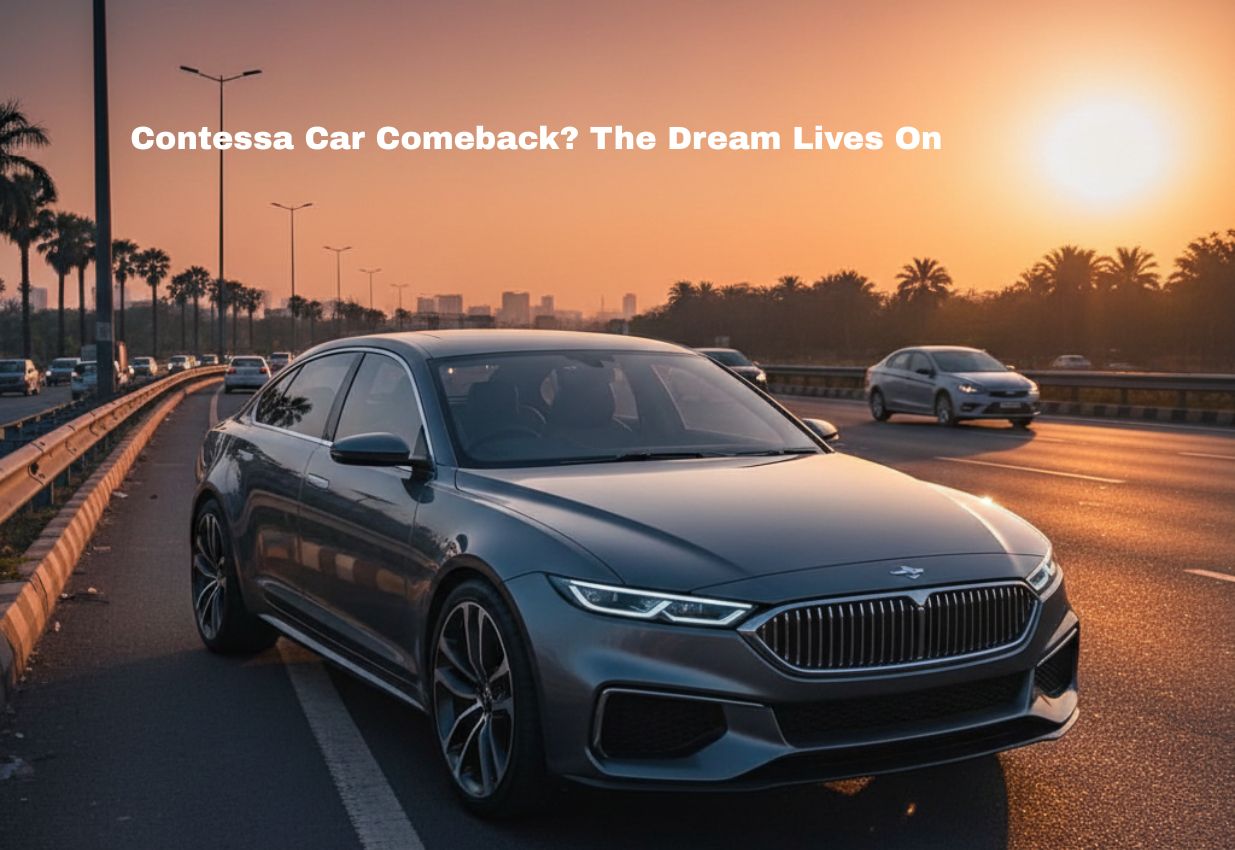
The Contessa Car is not just another vintage vehicle; it’s a timeless emblem of India’s automotive pride. For anyone wondering what made this car so iconic, the answer lies in its blend of British design, Indian craftsmanship, and muscle-inspired presence that defined an era of luxury and aspiration.
Born in the 1980s, the Contessa Car marked a turning point in the Indian automotive history, symbolizing a nation’s ambition to match global standards. Developed by Hindustan Motors, and inspired by the Vauxhall Victor from Britain, it combined style, power, and comfort like no other.
Even decades after its production ended, the Contessa Car continues to attract enthusiasts, collectors, and nostalgia-driven buyers across the country. Its legacy as the “Indian muscle car” remains unchallenged, a story of innovation, ambition, and elegance that shaped India’s love affair with automobiles.
The Birth of the Contessa – A Vision from Hindustan Motors
In the late 1970s, Hindustan Motors, already famous for the Ambassador, decided to create a premium car that reflected a more modern, global identity. The company acquired production tooling and design rights from the British Vauxhall Victor, a sophisticated European sedan known for its sleek profile and luxury.
This collaboration was revolutionary for Indian manufacturing. For ₹1.5 million pounds, Hindustan Motors secured blueprints, presses, and tooling to begin producing the Contessa Car at its Uttarpara plant near Kolkata.
By 1984, India saw the first locally produced Hindustan Contessa roll off the line. It was elegant, roomy, and carried a prestige that the average Indian sedan simply didn’t possess. It symbolized the arrival of India’s own luxury automobile.
Design & Engineering: British Roots, Indian Soul
The Contessa Car embodied the spirit of the Indian luxury car. With its long hood, broad stance, and plush interiors, it stood apart from the boxy cars of its time. Its design echoed British sophistication but was customized for Indian conditions, with stronger suspension, higher ground clearance, and locally sourced materials.
The interiors were luxurious for the era, featuring cushioned seats, soft carpeting, wood-grain panels, and a commanding dashboard. Compared to the Ambassador or Premier Padmini, the Contessa Car was in a class of its own. It wasn’t just transportation; it was a status symbol.
Even advertisements of the 1980s depicted it as an executive’s dream ride, a car for politicians, bureaucrats, and elite families. The message was clear: owning a Contessa Car meant success.
The Engine Evolution – From BMC to Isuzu Power
When launched, the Contessa Car was powered by a 1.5-liter BMC B-series engine, reliable but severely underpowered. It produced only about 54 horsepower, giving the car a modest top speed. Critics noted that such a heavy sedan deserved a more capable heart.
The real transformation arrived in 1986 when Hindustan Motors partnered with Japan’s Isuzu. This partnership brought modern 1.8-liter and 2.0-liter petrol engines, later joined by diesel and turbo-diesel options. The performance leap was dramatic, offering smoother acceleration, better reliability, and improved efficiency.
Hindustan Motors Contessa Specs (Isuzu Era)
| Feature | Specification |
|---|
| Engine Options | 1.8L & 2.0L Isuzu Inline-4 |
| Power Output | 88–90 HP |
| Torque | 135 Nm |
| Transmission | 5-Speed Manual |
| Mileage | 13–14 km/l |
| Fuel Type | Petrol / Diesel |
| Drive Layout | Rear-Wheel Drive |
| Seating Capacity | 5 Persons |
These Hindustan Motors Contessa specs placed the car far ahead of its local competitors. Its Contessa mileage of around 13 km/l may not seem impressive today, but for a luxury car of its time, it was remarkable.
The upgraded Isuzu engine made the car smoother, quieter, and more refined, turning it from an underpowered cruiser into a capable highway sedan.
The Contessa Muscle Car Debate – Myth or Reality
Many enthusiasts still call it the Contessa muscle car, while others label that claim as exaggerated nostalgia. So, what’s the truth behind the Hindustan Contessa truth debate?
American muscle cars, like the Pagani Zonda HP 150 or the Ford Mustang, were defined by raw V8 power and thunderous torque. The Contessa Car, on the other hand, had a smaller inline-four engine and was designed more for comfort than speed.
However, its long hood, low stance, and rear-wheel-drive layout gave it the aura of a muscle car. For Indian standards of the 1980s, it was powerful, stylish, and assertive, qualities rarely seen in locally manufactured vehicles.
Verdict
While the Contessa Car might not technically qualify as a “true” muscle car, it looked and felt like one. It inspired generations of Indian gearheads and remains India’s best interpretation of a Contessa muscle car identity.
The Rajiv Gandhi Government and the Rise of Modernization
During the mid-1980s, the Rajiv Gandhi government played a pivotal role in modernizing India’s economy and industries, including the automotive sector. Policies encouraging technology transfer and foreign collaborations made partnerships like Hindustan-Isuzu possible.
The Delhi Auto Expo, introduced during this era, opened the Indian market to global carmakers such as Suzuki, Ford, and GM. Yet, amidst these new names, the Contessa Car stood tall as India’s homegrown challenger.
This period marked a proud chapter in Indian automotive history, where Indian innovation met international technology.
Advertising, Popularity & Public Perception
The Contessa Car was marketed as “Sheer Poetry in Motion.” Its advertisements showed suited executives reading English newspapers in the backseat, symbolizing sophistication and success.
It quickly became a favorite among government officials, film stars, and top business families. Its spacious interiors and soft suspension made it ideal for long journeys and chauffeur-driven comfort, hallmarks of an Indian luxury car.
Although its price was higher than most Indian cars of the time, people were willing to pay for prestige. The Contessa price ranged from ₹4.8 lakh to ₹6 lakh depending on the variant, quite a statement in the 1990s.
You can also check modern luxury pricing trends like Pagani Zonda price in India or the upcoming Jetour car price in India for comparison.
Decline and Discontinuation
By the late 1990s, new competition from Maruti Suzuki, Tata, and Ford changed the market. Cars like the Maruti 800 and Tata Indica offered modern features, fuel efficiency, and affordability, areas where the Contessa Car struggled.
Despite the addition of a turbo-diesel Isuzu engine, sales continued to decline. Rising fuel prices and outdated styling sealed its fate. Hindustan Motors officially discontinued the Hindustan Contessa in 2002 after an 18-year production run.
Yet, even in retirement, its charisma endured. Enthusiasts began restoring and modifying old Contessas, keeping the legend alive.
Contessa Car Today – The Collector’s Gem
Today, the used Contessa market thrives among vintage-car enthusiasts. From Kerala to Maharashtra, owners restore these machines to pristine condition, sometimes even fitting modern V8 or Toyota 1JZ engines.
Car clubs like the “Conty Club” organize meet-ups celebrating this legendary automobile, proving that passion for the Contessa Car is far from extinct.
For modern restoration fans, exploring updates like the new Ambassador car price in India or upcoming models like the Toyota Sienna 2026 price in India can provide context for how vintage vehicles compare to today’s modern cars.
Quick Comparison Chart
| Category | Contessa Car (1984–2002) | Ambassador | Maruti 800 |
|---|
| Engine Power | 88–90 HP | 54 HP | 37 HP |
| Engine Type | Isuzu 1.8 L / 2.0 L | BMC 1.5 L | 0.8 L Inline-3 |
| Mileage | 13–14 km/l | 14–15 km/l | 18–20 km/l |
| Price (Original) | ₹5–6 L | ₹3 L | ₹2 L |
| Market Segment | Luxury Sedan | Family Sedan | Compact Hatchback |
This table clearly shows why the Contessa Car was admired for its power and comfort, even if it wasn’t the most fuel-efficient. It represented ambition and class at a time when Indian roads were ruled by simplicity.
For those following modern auto trends, see the latest models such as the HSW car list 2026 or the Kia Tasman price to witness how performance and design have evolved.
Why the Contessa Car Still Matters
The Contessa Car is more than nostalgia; it’s an important chapter in India’s industrial evolution. It showcased how Indian manufacturers could create vehicles that blended global design with domestic engineering.
It was luxurious yet accessible, bold yet elegant. The Hindustan Contessa truth is that it stood as a bridge between old-world charm and modern technology.
Even today, automotive designers study the Contessa Car for its proportions and stance. It paved the way for future Indian sedans and set a benchmark for style and aspiration.
Contessa Car Specifications Summary
| Specification | Details |
|---|
| Manufacturer | Hindustan Motors |
| Production Years | 1984 – 2002 |
| Platform | Vauxhall Victor FE |
| Body Type | 4-door Sedan |
| Engine | 1.5 L BMC, 1.8 L / 2.0 L Isuzu |
| Transmission | 4-speed & 5-speed Manual |
| Drive Type | Rear-Wheel Drive |
| Power | 54 – 90 HP |
| Torque | 135 Nm |
| Mileage | 13–14 km/l |
| Seating | 5 Adults |
| Category | Indian luxury car |
| Legacy | India’s First “Muscle Car” |
Frequently Asked Questions (FAQs)
What is the Contessa Car known for?
The Contessa Car is remembered as India’s first luxury sedan and is often regarded as the Indian muscle car for its bold design and powerful stance.
Who manufactured the Contessa Car?
It was produced by Hindustan Motors, the same company behind the iconic Ambassador.
What inspired the Contessa’s design?
The design was based on the Vauxhall Victor FE from the UK, modified for Indian conditions.
What was the top speed and mileage of the Contessa Car?
With its Isuzu engine, it achieved around 160 km/h top speed and a Contessa mileage of 13–14 km/l.
What was the Contessa price when new?
The Contessa price ranged between ₹4.8 lakh and ₹6 lakh depending on the variant and year.
Why did Hindustan Motors stop producing the Contessa?
Due to competition from modern, fuel-efficient models and outdated styling, production ended in 2002.
Can I still buy a used Contessa today?
Yes. A used Contessa is available in the vintage market, often restored and prized by collectors. You can also explore related updates like the Sundak Nero car price or Tata bike 150cc price for the latest trends.
Is the Contessa truly a muscle car?
Technically, no. But visually and symbolically, it remains the Contessa muscle car, India’s interpretation of power and style.
Conclusion: The Timeless Symbol of Indian Automotive History
The Contessa Car stands as a masterpiece of Indian engineering and ambition. It may no longer roll off assembly lines, but its influence still resonates across the country’s car culture.
From the Rajiv Gandhi government era that embraced modernization, to the rise of Hindustan Motors as a pioneer in luxury carmaking, the Contessa remains an inseparable part of Indian automotive history.
Its story is one of passion and progress, a journey from the Vauxhall Victor blueprint to the symbol of India’s first Indian luxury car. Whether you’re looking to buy a used Contessa, learn about Hindustan Motors Contessa specs, or simply admire its elegance, one truth remains:
The Contessa Car will forever be India’s proudest automotive legend.