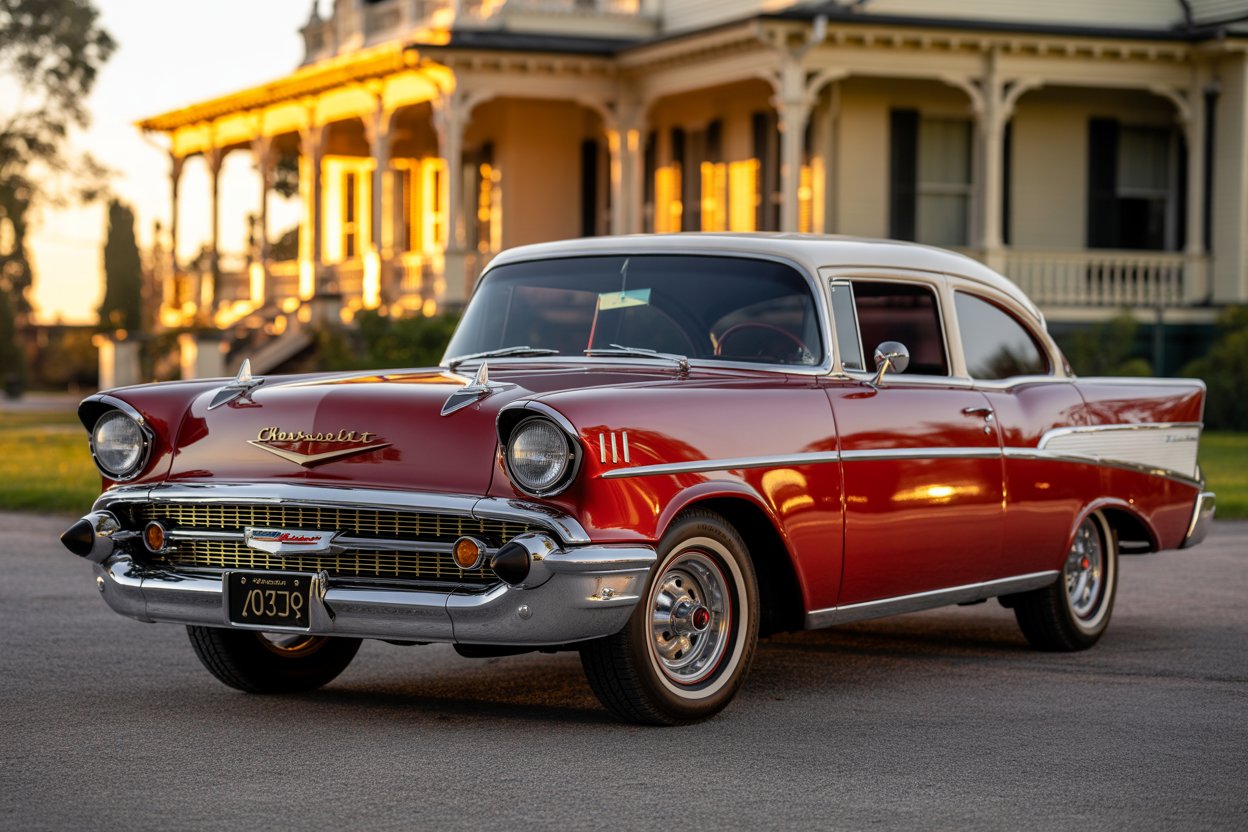
The 1957 Chevrolet 210 is more than a car; it is a cultural symbol of American innovation, classic design, and mechanical excellence. For anyone searching to understand why this model holds such prestige, the answer is clear within the first glance. The 1957 Chevrolet 210 combined accessible pricing with performance and beauty, making it one of the most admired classics of its time.
During the booming automotive years of the 1950s, Chevrolet produced a model that bridged practicality with style. Positioned between the affordable 150 and the premium Bel Air, the 1957 Chevrolet 210 offered powerful V8 engines, chrome detailing, and dependable craftsmanship. From the sporty 1957 Chevrolet 210 hardtop to the versatile 1957 Chevrolet 210 wagon, this car continues to represent a golden age of motoring.
This article explores the history, specifications, collector value, and cultural legacy of the 1957 Chevrolet 210, a masterpiece that defined mid-century American motoring.
he Story Behind the Chevrolet 210 (1953 to 1957)
The Chevrolet 210 (1953 to 1957) marked a turning point in post-war American automobile design. Introduced in 1953 as part of Chevrolet’s full-size car lineup, the Chevy 210 was intended to strike a balance between affordability and sophistication. While the base Chevrolet 150 was marketed as a budget-friendly option, and the Bel Air represented luxury, the 1957 Chevrolet 210 found the perfect middle ground. It appealed to families, young drivers, and enthusiasts who wanted style without overspending.
A Car Born in a Changing America
The early 1950s were an era of optimism and innovation. Consumers wanted cars that reflected progress, confidence, and individuality. The Chevrolet 210 (1953 to 1957) embodied this spirit through sleek styling, chrome accents, and advanced engineering. Its name, derived from the production code “2100,” was simplified to make it more marketable and modern.
Each model year brought subtle yet significant improvements. The first generation (1953–1954) introduced the clean lines and signature front grille, while the second generation (1955–1957) defined what many consider the golden age of Chevrolet. By 1957, the Chevy 210 had evolved into a true automotive icon, much like the 2026 Cadillac Motorhome launch symbolizes innovation today.
Evolution and Design Highlights
Between 1953 and 1957, Chevrolet refined nearly every aspect of the car’s design and performance. Below is a summary of key developments:
| Model Year | Key Highlights |
|---|
| 1953–1954 | Debut of the Two-Ten series. Known for its simplicity, durability, and balanced styling. |
| 1955 | Introduction of the small-block V8 engine. Marked a major leap in performance. |
| 1956 | Refined exterior with sharper lines and new tailfins. Improved interior comfort. |
| 1957 | Peak of design evolution featuring bold chrome, distinctive grille, and the famous 283 cu in V8. |
By 1957, the car’s combination of beauty and engineering excellence positioned it among the most admired vehicles in Chevrolet’s history. The 1957 Chevrolet 210 represented not just a model, but an era of craftsmanship that connected innovation with everyday driving.
1957: The Most Iconic Year of the Chevy 210
The 1957 Chevrolet 210 stood out as one of the most stylish and best-performing models in the Chevrolet lineup. It shared much of its body structure with the Bel Air but was lighter, slightly simpler, and far more accessible in price. This made it an ideal choice for buyers who wanted Bel Air looks without the premium cost.
Distinctive Styling
The 1957 model year featured one of the most recognized designs in American automotive history. The Chevy 210 showcased a bold grille, jet-inspired hood ornaments, and elongated tailfins that perfectly captured the 1950s aesthetic. The use of chrome trim was carefully balanced, giving the car a luxurious yet practical appeal.
Two models became particularly beloved: the 1957 Chevrolet 210 hardtop and the 1957 Chevrolet 210 wagon. The hardtop offered sporty lines and a pillarless design that emphasized performance and elegance. The wagon, on the other hand, provided families with space and comfort without compromising on visual appeal, much like the practicality seen in the 2025 Renault Triber.
Performance That Defined an Era
Under the hood, the 1957 Chevrolet 210 came equipped with a variety of powertrain options. Buyers could choose between the dependable inline-six or the new range of small-block V8 engines that delivered up to 283 horsepower. This flexibility made it popular among both everyday drivers and racing enthusiasts.
The table below highlights key engine configurations:
| Engine Type | Displacement | Horsepower Range | Transmission Options |
|---|
| Blue Flame I6 | 235 cu in | 140 hp | 3-speed manual / 2-speed automatic |
| Turbo-Fire V8 | 265 cu in | 162–225 hp | 3-speed manual / Powerglide automatic |
| Super Turbo-Fire V8 | 283 cu in | 185–283 hp | 3-speed or Turboglide automatic |
With this performance range, the 1957 Chevrolet 210 could be both a reliable family car and a powerful machine capable of impressive acceleration and smooth handling.
Why the 1957 Chevrolet 210 Became a Collector’s Dream
The 1957 Chevrolet 210 holds a special place in the hearts of car enthusiasts around the world. Its design, performance, and cultural impact have made it one of the most collectible Chevrolets ever produced.
Styling and Performance Balance
Collectors value the Chevy 210 for its perfect blend of form and function. Unlike some models that focused purely on looks, the 210 offered both beauty and drivability. Its smaller size and lighter frame made it responsive on the road, while its bold aesthetics ensured it never went unnoticed.
Affordability and Customization
When new, the 1957 Chevrolet 210 was priced within reach of the average American family. This accessibility helped it reach a wide audience. Today, its simplicity also makes it a favorite for restoration projects and custom builds. Enthusiasts often modify their cars with upgraded engines, suspension systems, and interiors while maintaining the car’s authentic charm, similar to projects like the Tata Classic 110 bike launch.
A Symbol of the Tri-Five Legacy
The 1955–1957 Chevrolet models are commonly known as the “Tri-Five” series, representing the pinnacle of mid-century design. Within this group, the 1957 Chevrolet 210 is often regarded as the most balanced model due to its versatility, reliability, and enduring visual appeal.
Current Market Value and Collectibility
Today, the 1957 Chevrolet 210 continues to appreciate in value among collectors. Prices depend on condition, originality, and the type of restoration performed. According to market analyses from reputable platforms such as Classic.com and Classic Auto Mall, values range widely.
| Condition | Estimated Market Price (Rs) | Notes |
|---|
| Excellent Original | Rs 70,00,000 – Rs 95,00,000 | Fully preserved or authentic restorations |
| Restored | Rs 40,00,000 – Rs 65,00,000 | Partial restorations with modern upgrades |
| Custom / Modified | Rs 30,00,000 – Rs 55,00,000 | Depends on engine swaps and modifications |
The Chevrolet 210 (1953 to 1957) series has shown consistent demand in the collector market. The 1957 Chevrolet 210 hardtop and 1957 Chevrolet 210 wagon variants often command higher prices due to their unique designs and limited production numbers. For comparison, recent trends such as the 2026 Rolls Royce Ghost continue to demonstrate how timeless design influences modern luxury vehicles.
Common Restoration Challenges and Maintenance Tips
Restoring a 1957 Chevrolet 210 can be rewarding, but it requires knowledge and patience. Below are some common challenges and expert recommendations:
1. Rust Damage:
Frame and underbody rust are frequent issues. Always inspect and replace compromised sections using original-spec materials.
2. Electrical Systems:
The original 6-volt electrical setup can be upgraded to a 12-volt system for better reliability and lighting.
3. Authentic Parts:
Maintaining originality increases the car’s value. Source genuine Chevrolet parts from verified classic car suppliers.
4. Regular Maintenance:
Keep the car in top condition through frequent oil changes, tune-ups, and brake inspections.
5. Documentation:
Ensure proper VIN verification and ownership paperwork to preserve authenticity during resale.
You can explore modern restoration inspirations from the 2025 Cadillac Escalade review or check out trends in Mazda motor home launch 2026.
The 1957 Chevy 210 in Pop Culture and Car Shows
The 1957 Chevrolet 210 has been featured in countless car shows, movies, and advertisements, symbolizing the golden age of American motoring. It frequently appears in restoration events, auto museums, and hot rod exhibitions, admired for its timeless design.
Car enthusiasts consider the Chevy 210 a versatile canvas for creative builds. Whether restored to factory condition or modified for modern performance, it continues to inspire new generations of car lovers around the world, much like the excitement surrounding the 2026 Yamaha RX 100 comeback.
Conclusion
The 1957 Chevrolet 210 remains one of the most admired and collectible cars ever produced by Chevrolet. Its balanced blend of style, performance, and affordability has secured its place in automotive history. Both the 1957 Chevrolet 210 hardtop and the 1957 Chevrolet 210 wagon exemplify craftsmanship and cultural influence that few other models can match.
For collectors, restorers, or anyone who appreciates the art of driving, the 1957 Chevrolet 210 stands as a reminder of a time when cars were more than machines—they were expressions of identity, freedom, and innovation.
You can also explore new automotive icons like the Kia Seltos 2026 launch date or the Top 5 fastest F1 car 2025 for comparison to modern performance machines.
Frequently Asked Questions
1. What engine options were available in the 1957 Chevrolet 210?
Buyers could choose between a Blue Flame inline-six and several Turbo-Fire V8 options ranging from 162 to 283 horsepower.
2. What makes the 1957 Chevrolet 210 so popular among collectors?
Its combination of stunning design, strong performance, and accessibility makes it a desirable choice for restoration and display.
3. How much does a 1957 Chevrolet 210 cost today?
Depending on condition and originality, prices range between Rs 30,00,000 and Rs 95,00,000 in today’s collector market.
4. What are the key differences between the 1957 Chevrolet 210 and the Bel Air?
The Bel Air offered more luxury trim and interior detailing, while the Chevy 210 provided similar performance at a lower price.
5. Is the 1957 Chevrolet 210 reliable for everyday driving?
When properly maintained or restored with modern upgrades, it can deliver reliable performance for casual use.
6. Which is more valuable, the 1957 Chevrolet 210 hardtop or wagon?
The hardtop usually commands a higher price due to its sporty appearance, but well-preserved wagons are equally sought after.
7. What are the best modern upgrades for the Chevrolet 210?
Disc brakes, suspension improvements, and electronic ignition systems are popular upgrades that enhance safety and drivability.
8. What colors were most popular for the 1957 Chevrolet 210?
Classic combinations like India Ivory, Matador Red, and Onyx Black remain favorites among restorers and collectors, similar to vibrant shades seen on the Honda Activa 8G 2025 specs.