

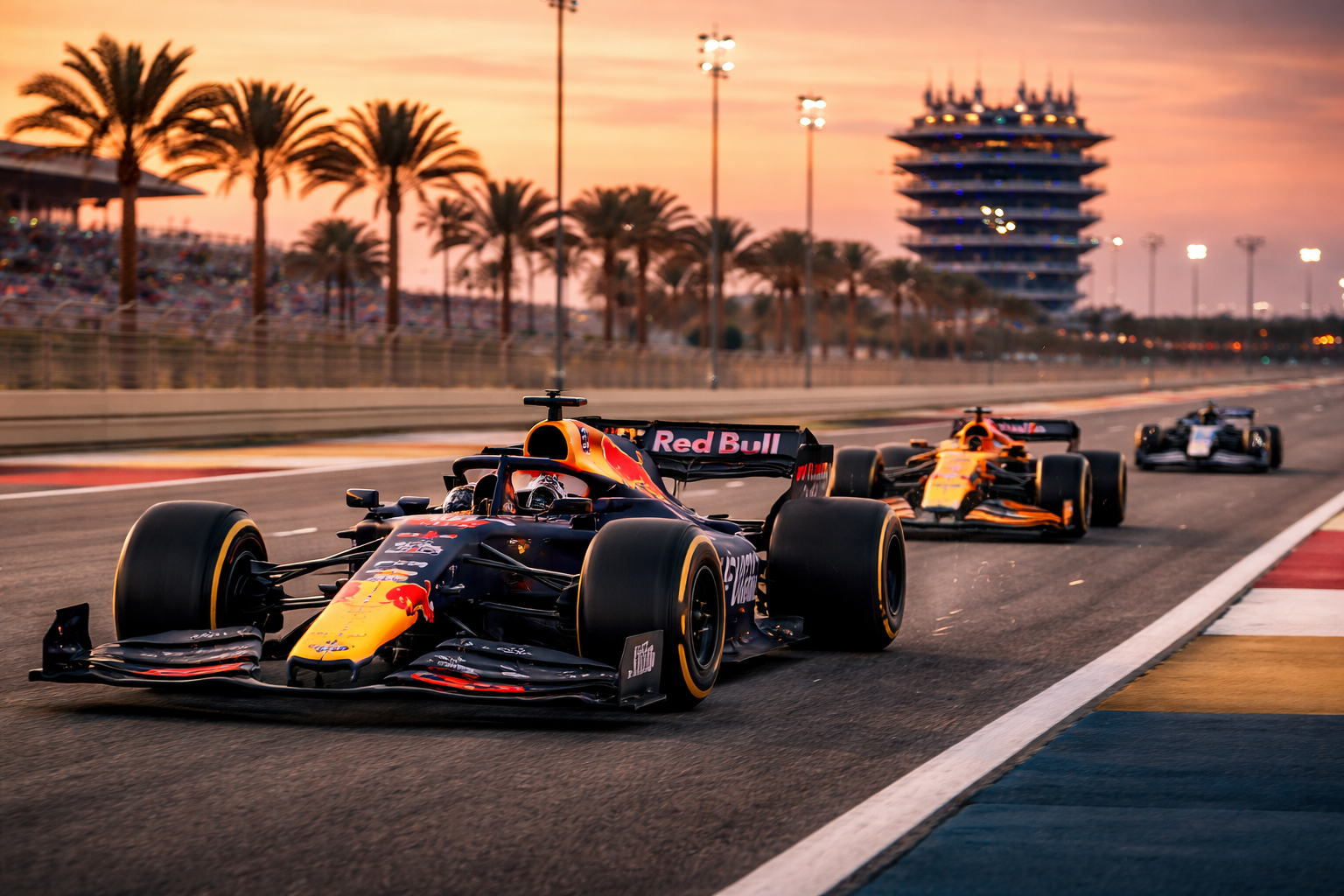

Bahrain F1 Testing gives us the clearest early picture of team performance before the season begins. The 2026 pre-season sessions in Bahrain revealed pace trends, reliability signals, and early championship indicators across the grid.
Just as the Indian automotive market evolves every year, reflected in reports like car sales January 2026, Formula 1 teams continuously refine their cars to gain a competitive advantage. This year’s Bahrain F1 Testing delivered valuable insights into McLaren’s progress, Red Bull’s development, and the tightening midfield battle. In this complete breakdown, we analyze day-wise results, team reactions, technical trends, and what it all means for the upcoming championship.
Overview of the 2026 F1 Pre-Season Test Bahrain
The 2026 F1 pre-season test Bahrain marked the first competitive benchmark of the new season. Similar to how manufacturers launch updated road cars such as those analyzed in the 2026 Renault Duster price India review, Formula 1 teams used the Bahrain pre-season test to validate new technical upgrades.
The F1 Bahrain pre-season environment offers predictable weather and a technical layout ideal for performance comparisons. During Bahrain F1 Testing, teams focused on aerodynamic balance, race simulations, and reliability validation.
Day One F1 Test – Early Performance Signals
The opening session of the Day 1 F1 test provided immediate excitement. Lando Norris delivered a strong performance, making the Lando Norris Bahrain test one of the most discussed runs of the week.
The consistency shown during McLaren F1 testing suggested clear improvements over last season. Just as iconic vehicles like the Contessa Car represent strong identity in Indian automotive history, McLaren appears to be building a distinctive performance identity this season.
Key Highlights from Day One
- McLaren topped early timings
- Red Bull focused on race simulations
- Ferrari tested updated aerodynamic concepts
- Mercedes experimented with balance adjustments
Early F1 testing updates indicated McLaren’s confidence in short-run speed.
Day Two F1 Testing – Long Runs and Reliability
Day 2 F1 testing shifted focus toward race simulations and tire degradation management. Teams prioritized consistency rather than headline lap times.
The F1 testing analysis from this session revealed that Red Bull’s long-run performance remained competitive. Observers compared this measured development approach to the steady refinement seen among manufacturers discussed in our guide on European Car Brands in India.
Throughout F1 testing Bahrain, reliability levels remained strong among leading teams.
Final Day F1 Testing – Competitive Order Emerges
The Final day F1 testing provided the clearest view of potential front runners. Qualifying simulations dominated the session, and teams pushed performance closer to race conditions.
The F1 Bahrain test results on the final day suggested McLaren and Red Bull are closely matched. The Final day F1 testing runs were consistent and controlled, reinforcing patterns observed earlier in Bahrain F1 Testing.
Red Bull New Car – Performance Evaluation
The Red Bull new car displayed subtle but important aerodynamic refinements. During Max Verstappen F1 testing, the reigning champion emphasized improved stability and predictable handling characteristics.
His Pre-season testing reaction suggested cautious optimism. The development approach mirrors the steady evolution seen in road models like the Skoda Kylaq, where incremental refinement often delivers stronger long-term results.
McLaren F1 Testing – Momentum Building
The McLaren F1 testing program stood out during Bahrain F1 Testing. The pace shown in the Lando Norris Bahrain test demonstrated impressive aerodynamic efficiency and balance.
McLaren’s balanced setup approach is similar to practical road vehicles such as the Urbania Car, which focus on stability and usability rather than aggressive extremes.
Repeated F1 testing updates confirmed McLaren’s reliability across multiple sessions.
Team-by-Team F1 Testing Analysis
Red Bull
The Red Bull new car appears stable and race-ready. Insights from Max Verstappen F1 testing indicate strong confidence in long-run performance.
McLaren
Performance during the Day 1 F1 test and follow-up sessions reinforces the strength of McLaren F1 testing data.
Ferrari
Ferrari’s consistency during Day 2 F1 testing suggests improved tire management strategies.
Mercedes
Mercedes refined setup balance progressively throughout F1 testing Bahrain, narrowing performance gaps.
Technical Trends from Bahrain F1 Testing
Several design patterns emerged during Bahrain F1 Testing:
- Narrower sidepod concepts
- Revised floor geometries
- Enhanced cooling efficiency
- Aggressive rear wing experimentation
Design evolution in motorsport follows a similar pattern to heritage vehicles preserved at places like the Payana Car Museum, where gradual innovation shapes long-term performance identity.
What Bahrain F1 Testing Means for the 2026 Season
The data from Bahrain F1 Testing indicates a tightly contested championship battle. Competitive margins appear narrower than in previous seasons.
Key Insights
- McLaren demonstrating strong qualifying pace
- Red Bull maintaining consistent race performance
- Ferrari competitive in longer stints
- Mercedes improving steadily
Just as older mass-market vehicles such as the Omni Car once defined an era before market evolution reshaped consumer expectations, Formula 1 teams must continuously adapt to remain competitive.
The overall outcome of Bahrain F1 Testing suggests that the 2026 season could deliver intense and closely fought races.
Final Verdict
Bahrain F1 Testing has offered a compelling preview of the upcoming season. McLaren’s pace, Red Bull’s stability, and Ferrari’s consistency create a competitive foundation.
As teams analyze deeper data from the F1 Bahrain test, performance hierarchies may still evolve. However, insights gathered during Bahrain F1 Testing strongly indicate that the 2026 championship battle will be balanced, strategic, and highly competitive.